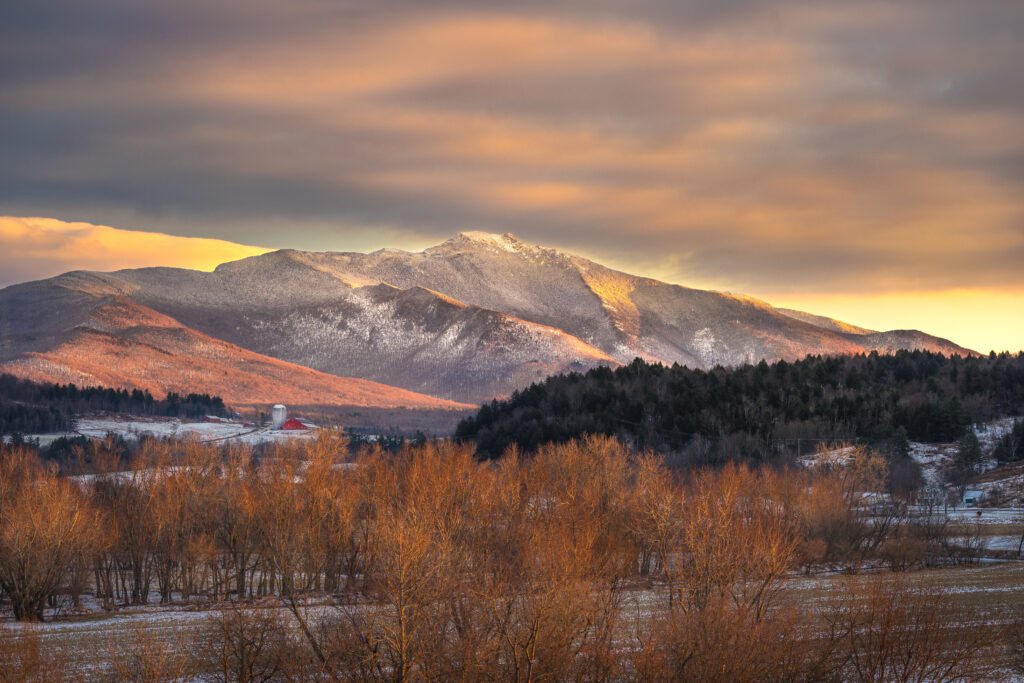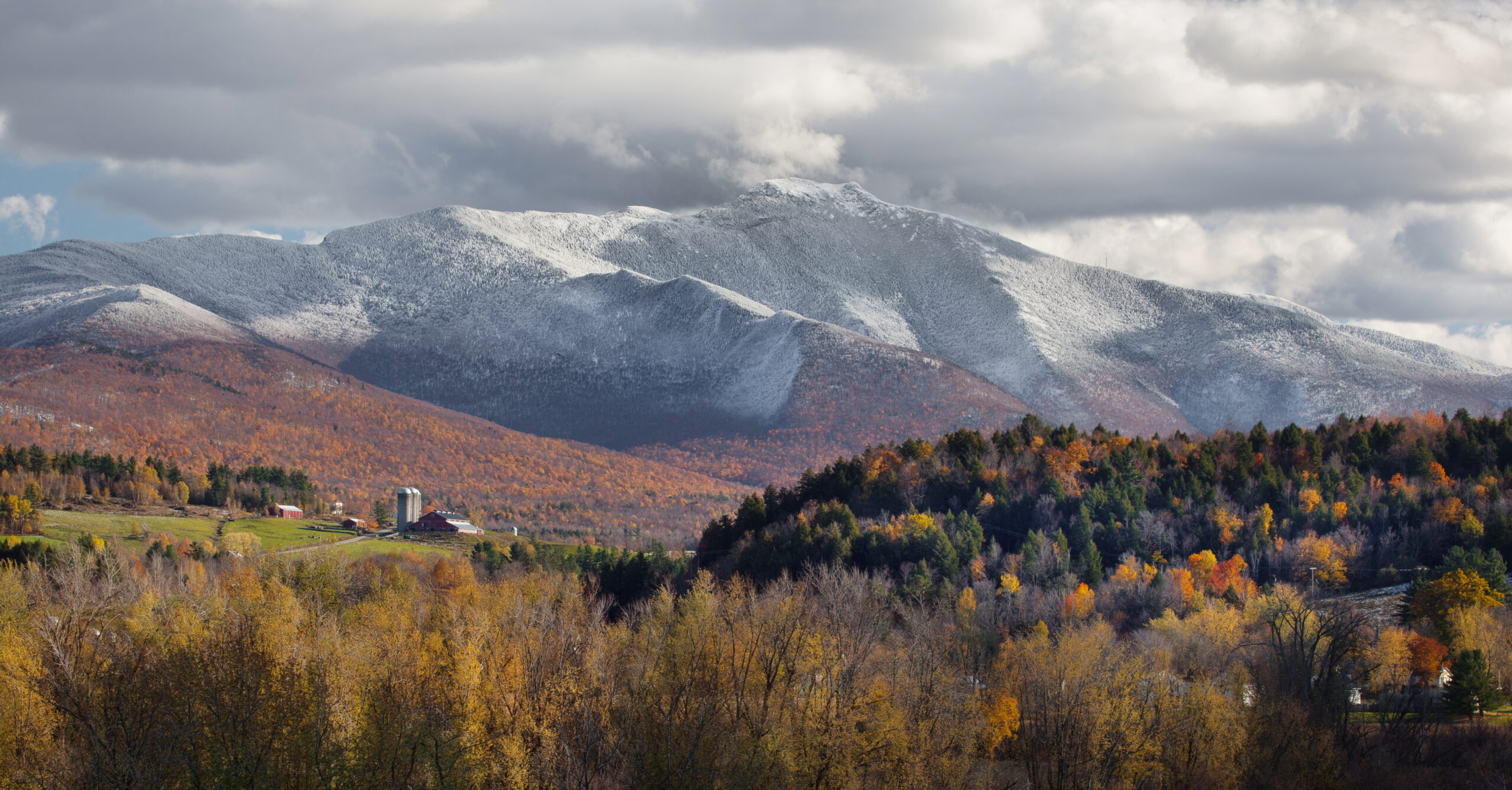
Vermont’s tallest and most spectacular mountain, Mount Mansfield aka The Madonna, offers some of the most dramatic photographic opportunities in the state. If you’ve ever admired stunning photos of this peak and wondered where those classic shots were captured, you’re in luck. These locations are surprisingly accessible—all you need is a camera, a telephoto or zoom lens, and ideally a tripod for stability when zooming in.
Equipment Notes
Most the shots featured here were taken with a 100-400mm zoom lens on a full-frame camera (equivalent to roughly 50-300mm on a cropped sensor). The longer lens is crucial for these compositions. It may seem counterintuitive, but to capture the mountain’s true scale, you need some distance. This allows your telephoto lens to compress the perspective, pulling distant elements together and creating that dramatic, layered effect.
The Route
I’ll focus on five prime locations along the mountain’s north side, from Cambridge to Fletcher. While other nearby towns like Underhill offer noteworthy views, these spots provide clean, accessible vantage points from the road or just a few feet away with easy parking. They’re close together, making it possible to visit multiple locations in a single outing. Each features classic Vermont farms as foreground elements, creating balanced compositions with foreground, mountain, and sky.
1. Pleasant Valley – https://maps.app.goo.gl/X4BghpDjXr4vQ3YQ6
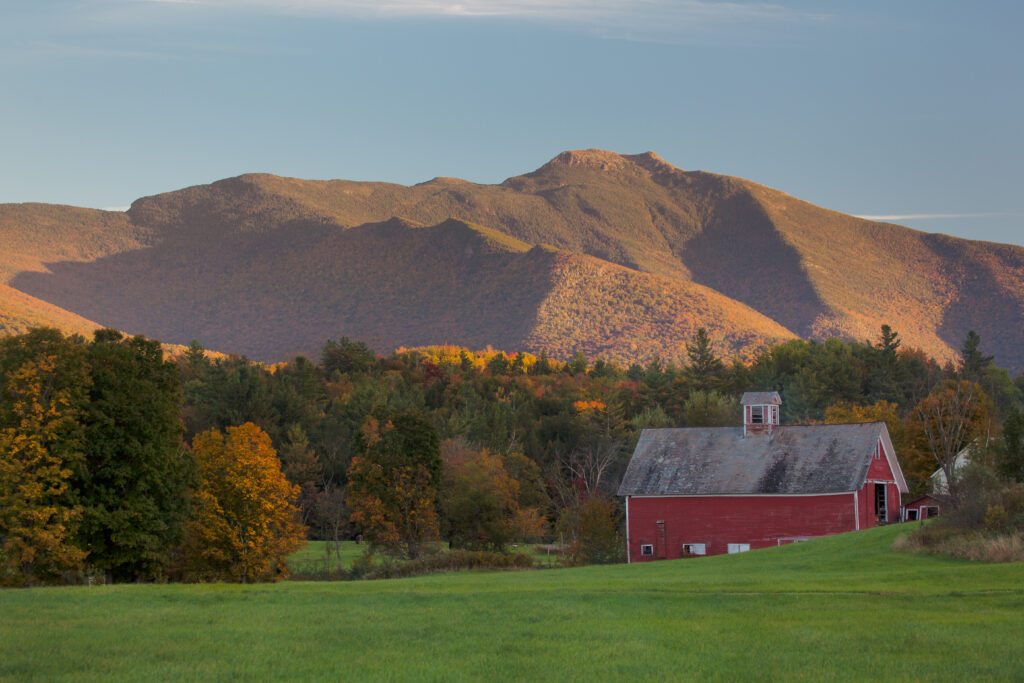
Starting closest to the mountain, we begin on Lower Pleasant Valley Road in Cambridge. This is the quintessential Vermont scene: a red barn framed against Mount Mansfield.
The spot on the map that I’ve linked above is where you’ll park, not where you’ll shoot. Watch for traffic, cross the road, and position yourself beneath the power lines to keep them out of your frame. Directly under the first pole that you come to, you’ll have your first clear view of both barn and mountain.
First, take a look at the river. If there’s any interesting foliage down there or high water, consider including it in a horizontal composition for your initial shot. You may want to move down the bank slightly to move the mountain, barn, and river into alignment. You won’t need the zoom lens for this view. However, this typically isn’t the strongest shot, so switch over to your telephoto.
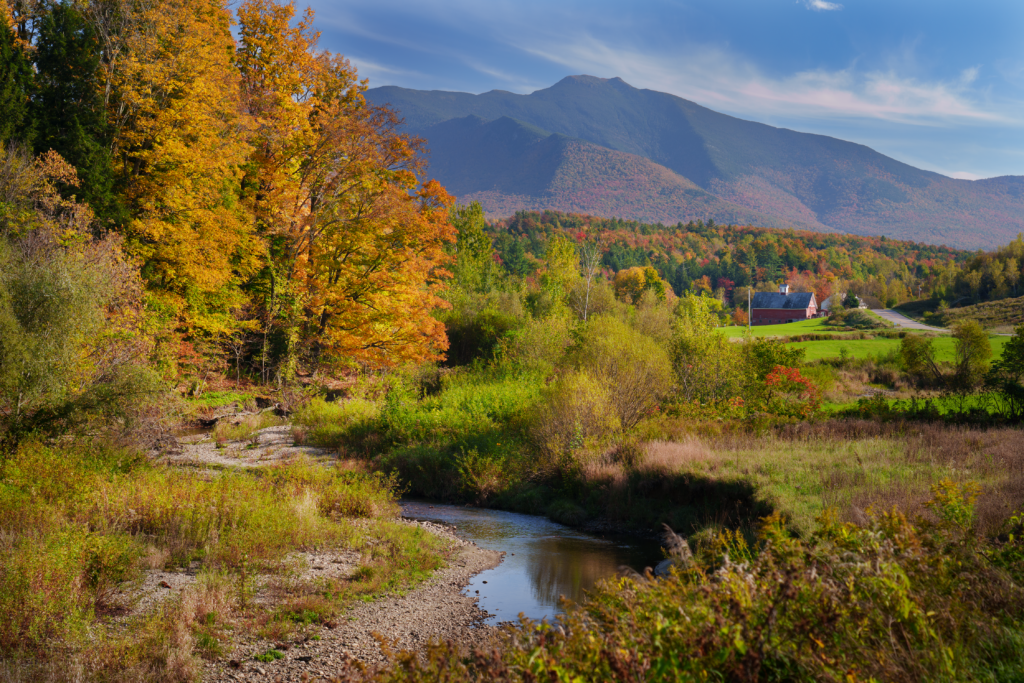
From this initial position, a vertical composition won’t quite be able to align both barn and mountain, so you may want to take your initial shots from here horizontally. Next for more dramatic shots, start walking down the road toward the mountain. Between the second and third poles the barn will emerge from behind the bushes. Stop as soon as you have a clear view—this is usually going to be the prime shooting position.
You want to go vertical with these shots. If you zoom in until you have a bit of sky above the mountain and a bit of grass below the barn, then the composition practically creates itself. A tripod is especially helpful here.
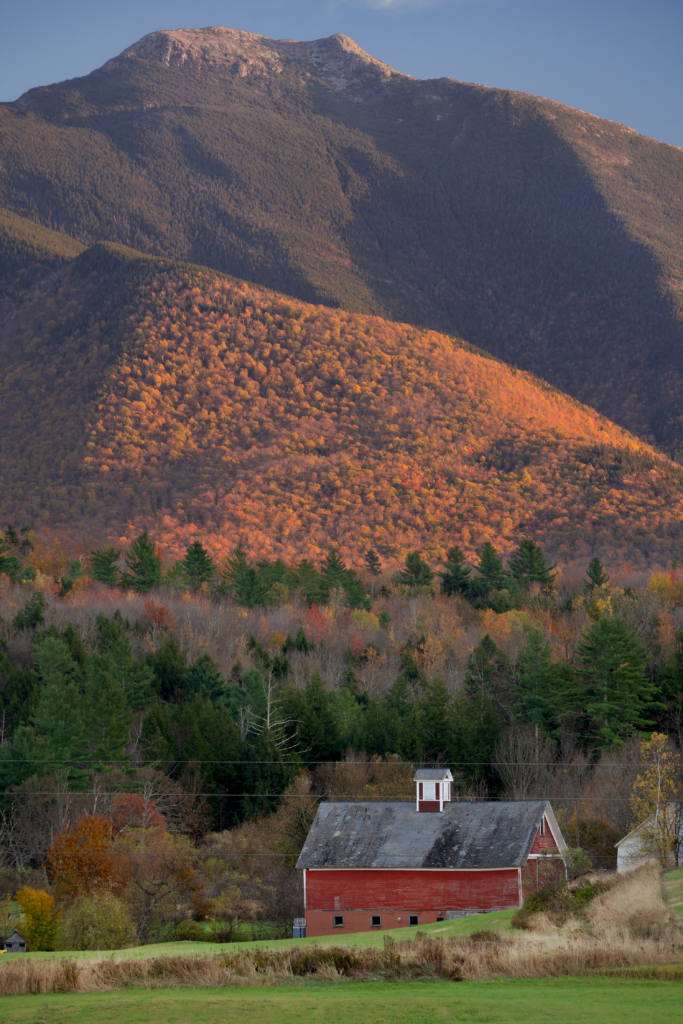
Continue down the road a bit farther. As you approach the third pole, more of the road enters the frame. I typically stop before that point to avoid including the road. Now, if you are lucky enough to find someone out working in the fields you may be able to get permission to venture into the meadow on the left for a different perspective that shows more barn and less pavement.
2. Sweet Road – https://maps.app.goo.gl/kvWuYWjbMRnB3kzLA
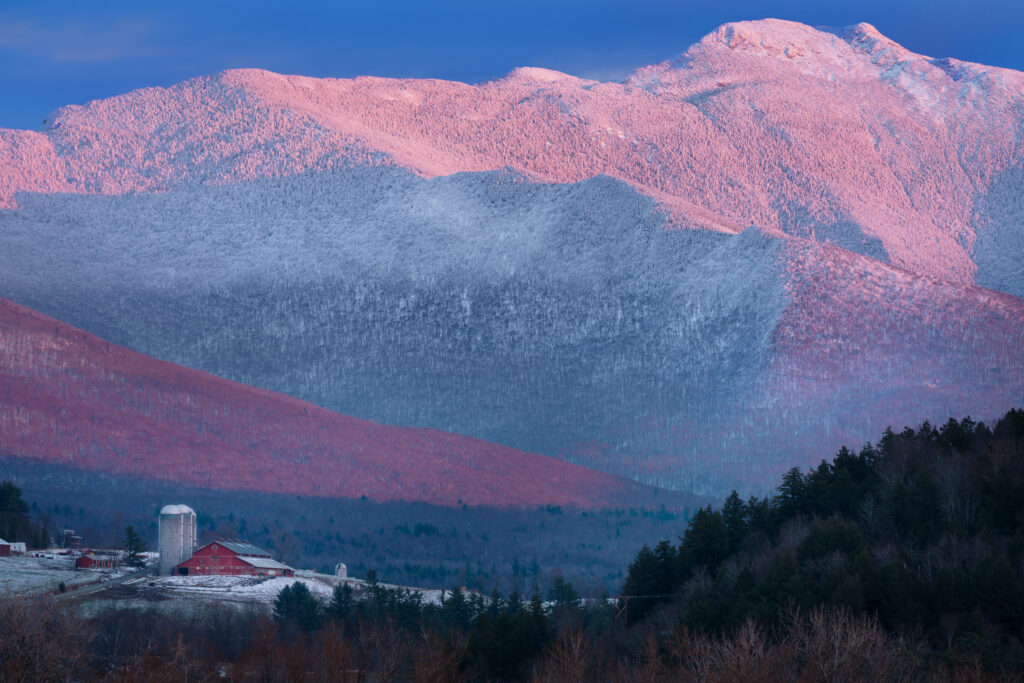
Head back to Cambridge village, turn right, cross over the Lamoille River bridge, then take an immediate left onto Pumpkin Harbor Road. Sweet Road will be your first road on the left. Just a few hundred feet farther, at the top of the first hill, you’ll discover what I consider Vermont’s finest mountain view.
I typically turn my vehicle around and park halfway back down the hill on the right shoulder (far enough down to avoid surprising traffic coming around the blind curve). Walk back up to the top and set up by the apple tree. This classic vista features a red barn perched on Bryce Road’s hilltop, positioned perfectly between you and Mansfield.
While wide shots work well, especially if you have mist in the valley or if the river floods in spring and reflects the sky, but the real magic happens when you zoom in. The telephoto compression makes the mountain loom dramatically over the barn.
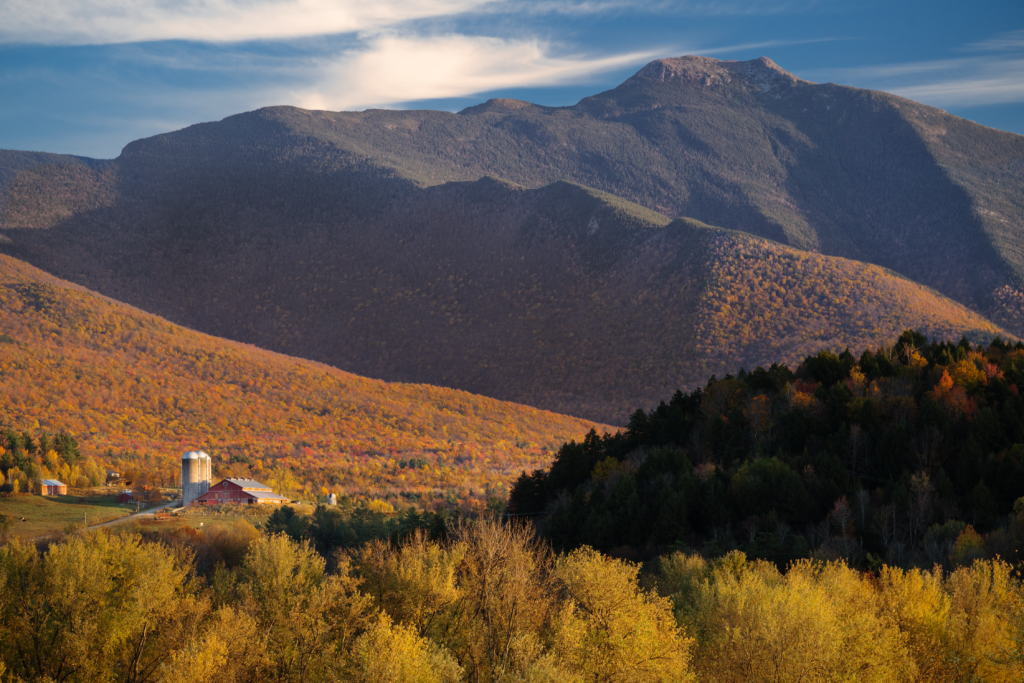
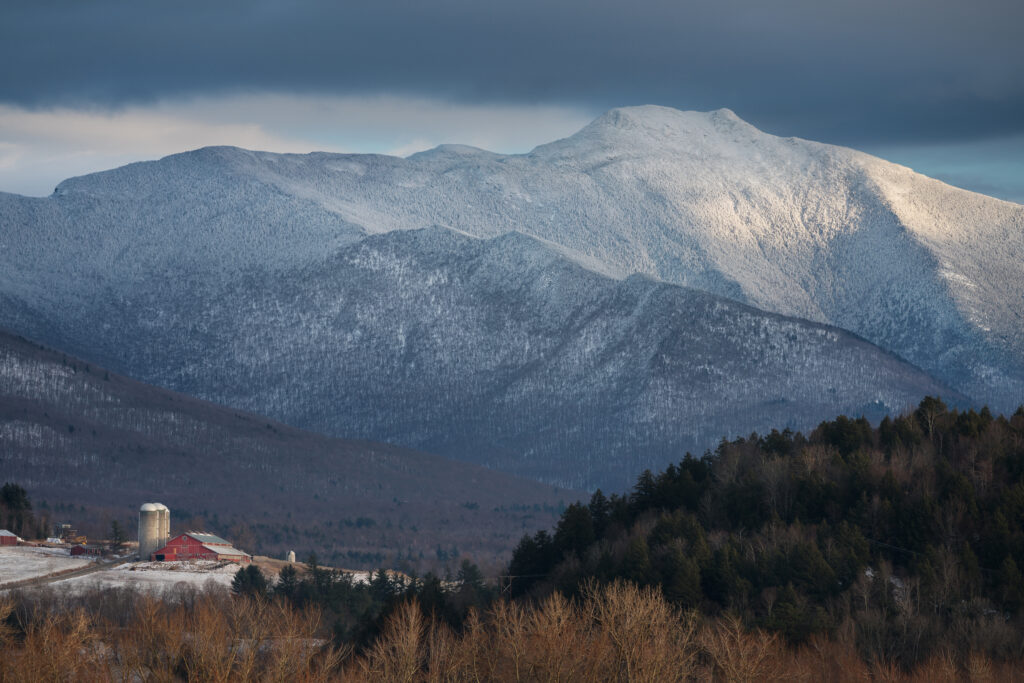
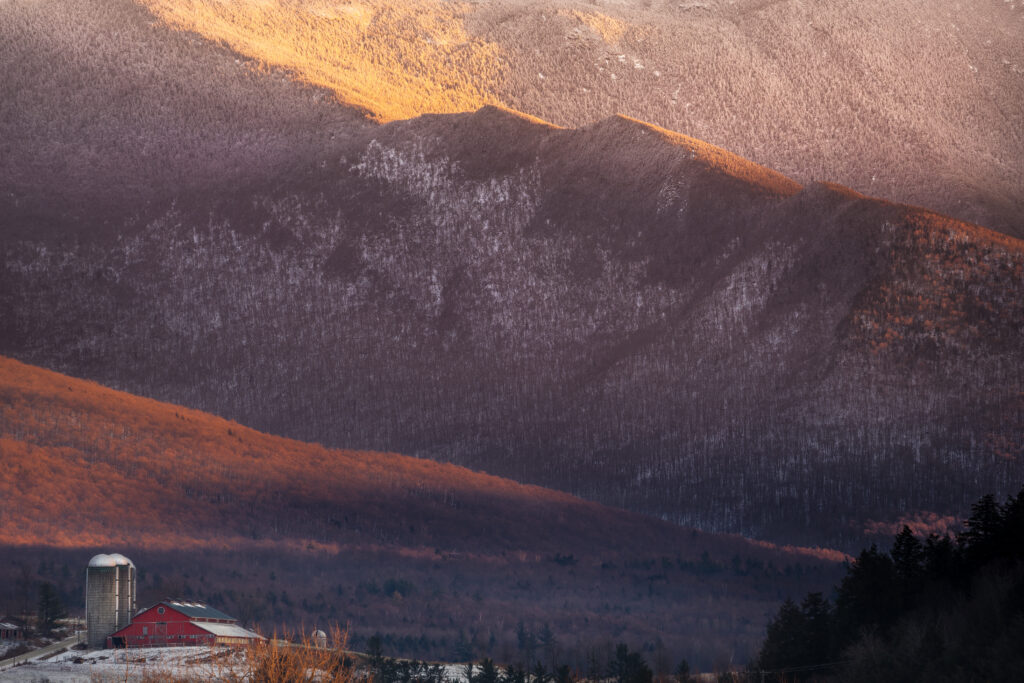
Mansfield’s scale becomes particularly impressive if you zoom in enough to eliminate the sky entirely.
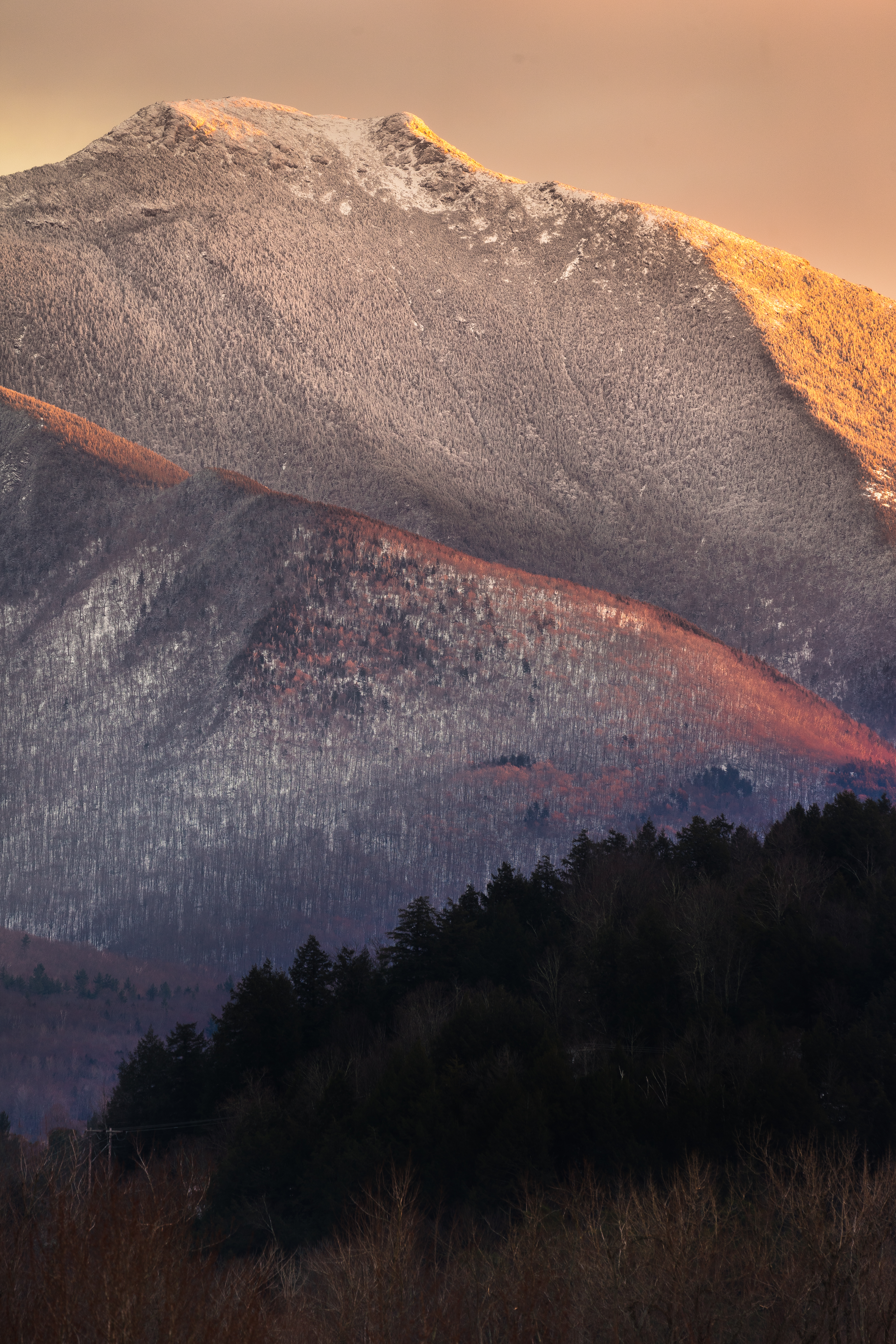
One of the best practices when using a telephoto lens is to simplify your composition. Try to eliminate complicated details and just treat the subjects like large abstract shapes. I always like to get in a couple of vertical shots zoomed all of the way in. I’ve not seen another photographer use this particular composition so it may or may not be unique to me. This framing uses the dark arc of pines at the lower right and the line formed by the ridge to lead the viewer’s eyes up to the top of the mountain.
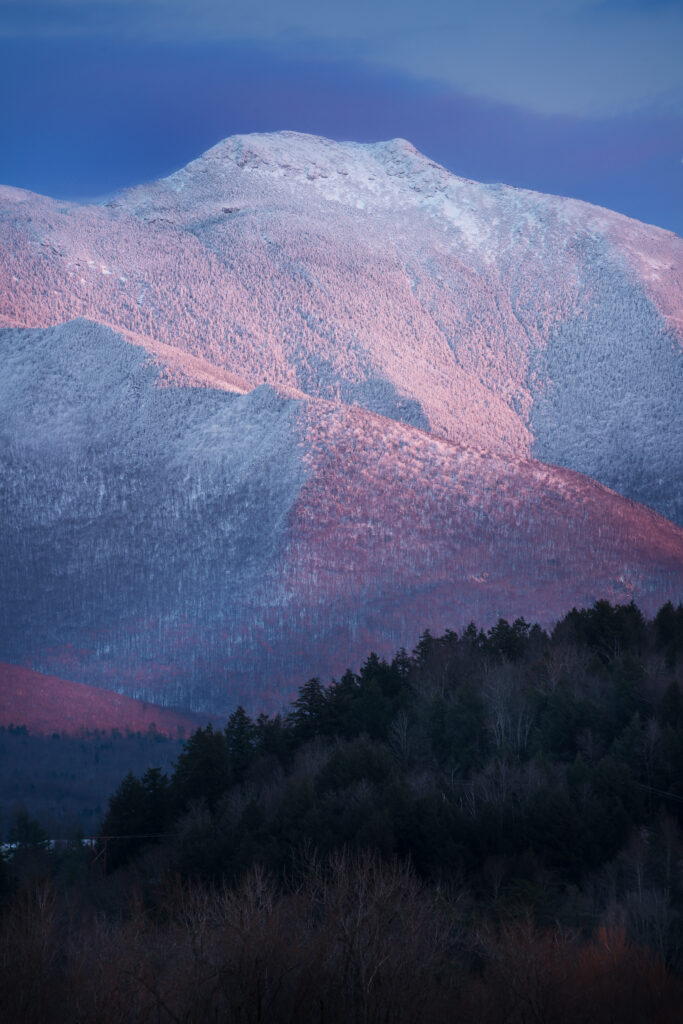
3. In the Road – https://maps.app.goo.gl/hSg7DBQQQftzxkNr8
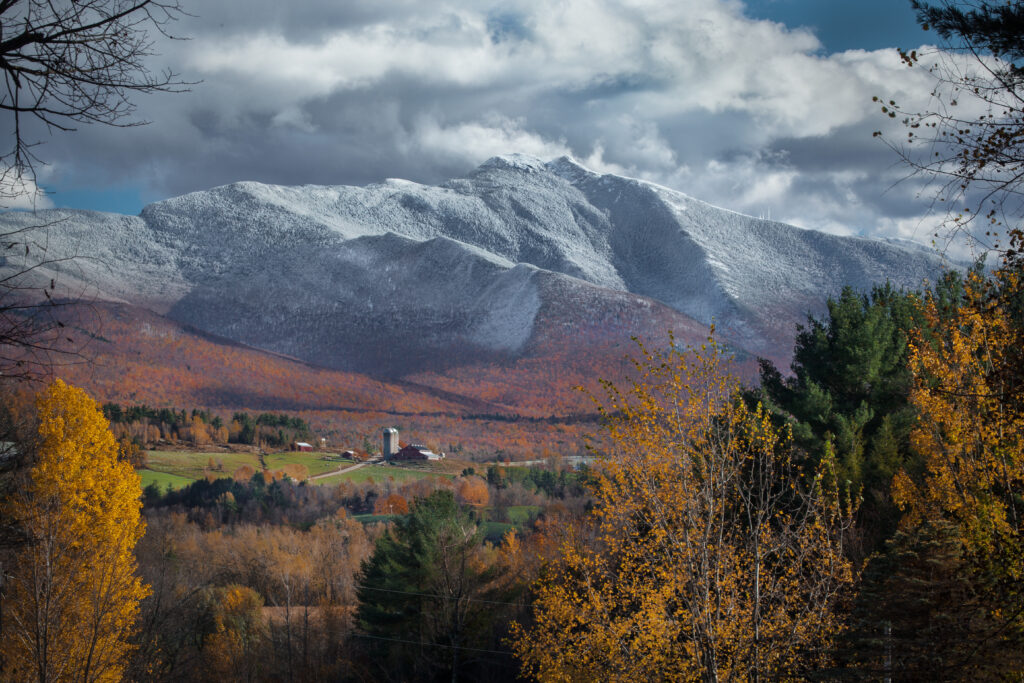
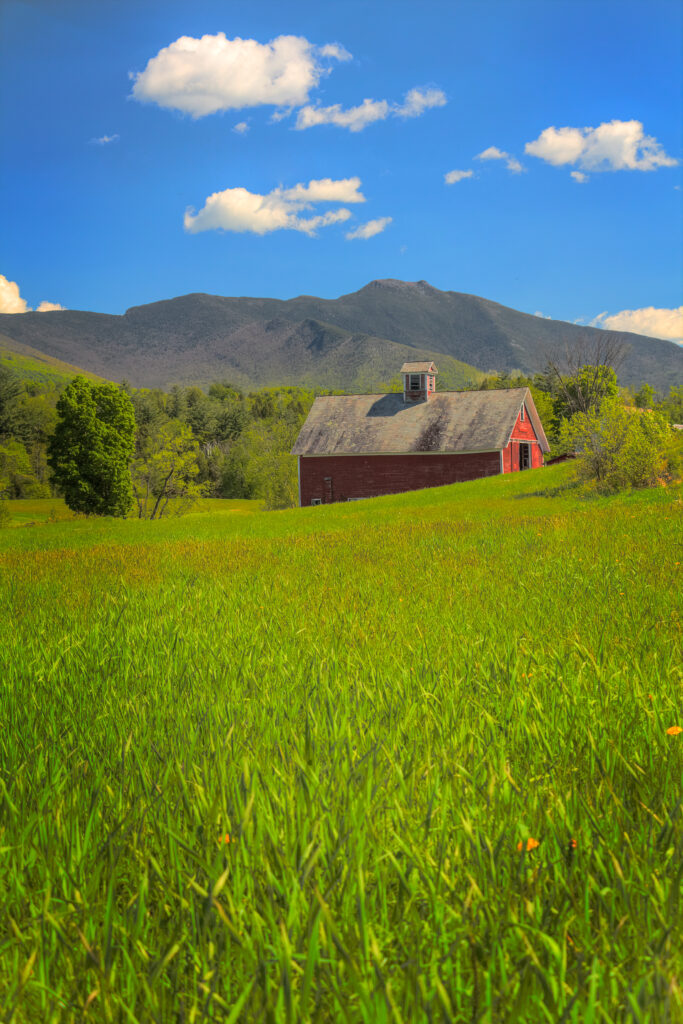
This location is slightly riskier since you’ll be shooting from the middle of Pumpkin Harbor Road. You’ll find the spot just a few hundred feet uphill from Sweet Road. There’s a pullover on the right as you enter a stand of trees. I don’t recommend a tripod here—stay alert for traffic from both directions.
This spot offers two compositional advantages: it nearly centers the barn beneath the mountain, and allows you to frame the edges of the shot with foliage. One caveat: timing matters. You can see the result in the picture above. I didn’t get the timing quite right and there weren’t many leaves left of the trees closest to me. The branches in the upper corners were nearly bare by that date. Despite these less-than-ideal conditions, this became my first viral photograph. Never underestimate the power of natural framing.
Since you’re using foliage as a frame, shoot in summer or early autumn. You won’t need as much zoom here since you want more of the scene—I shot at 160mm. The wider focal length also helps keep your shot steady without a tripod. Be careful and work quickly.
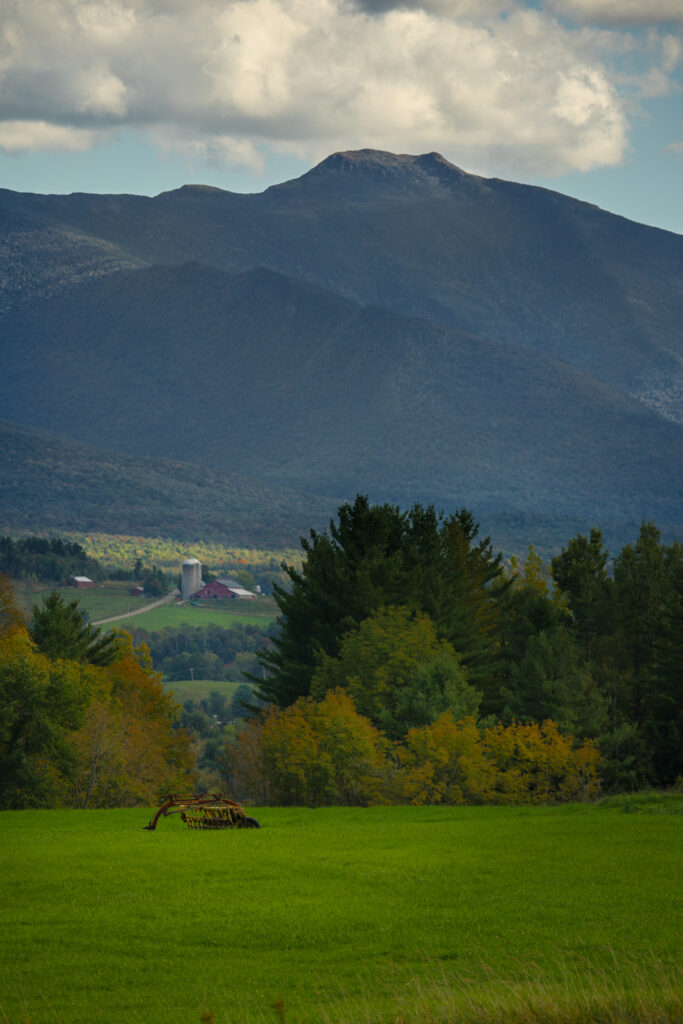
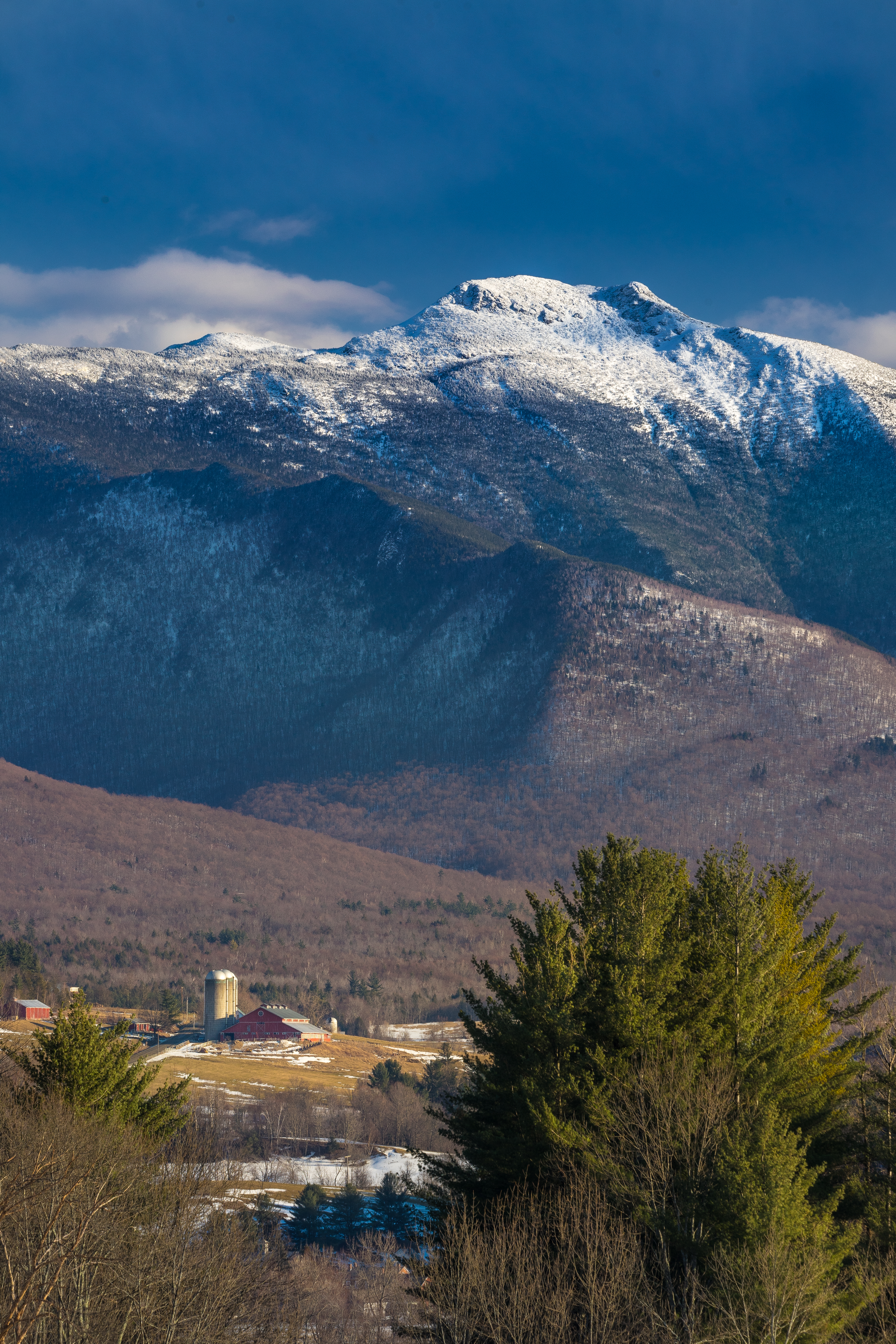
4. Tree Break with a View – https://maps.app.goo.gl/nWrX7bkZrJG5v58r5
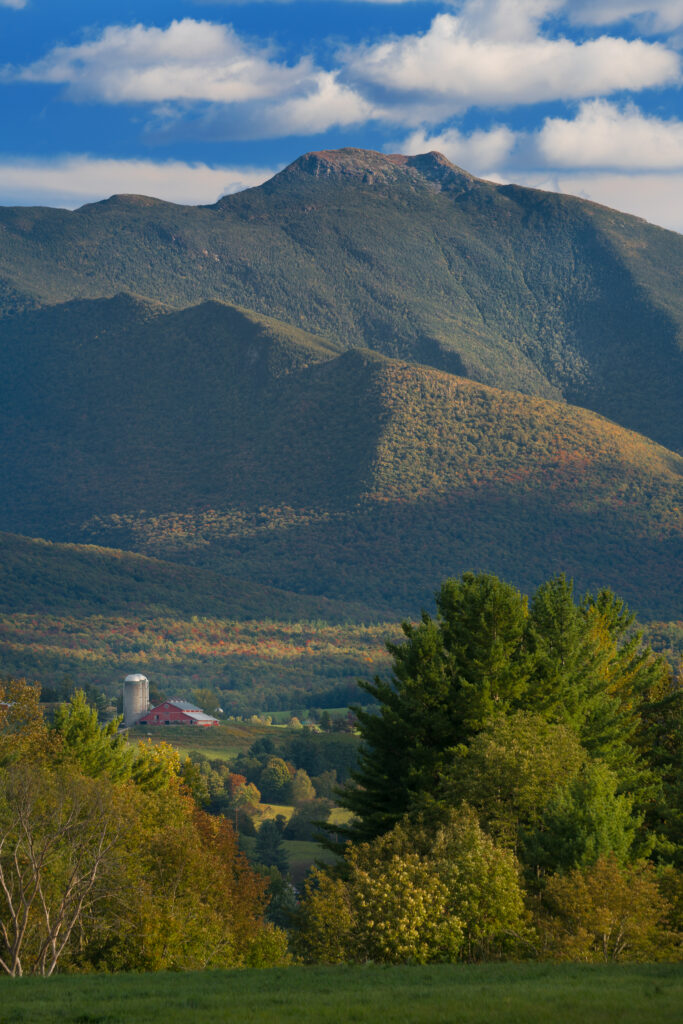
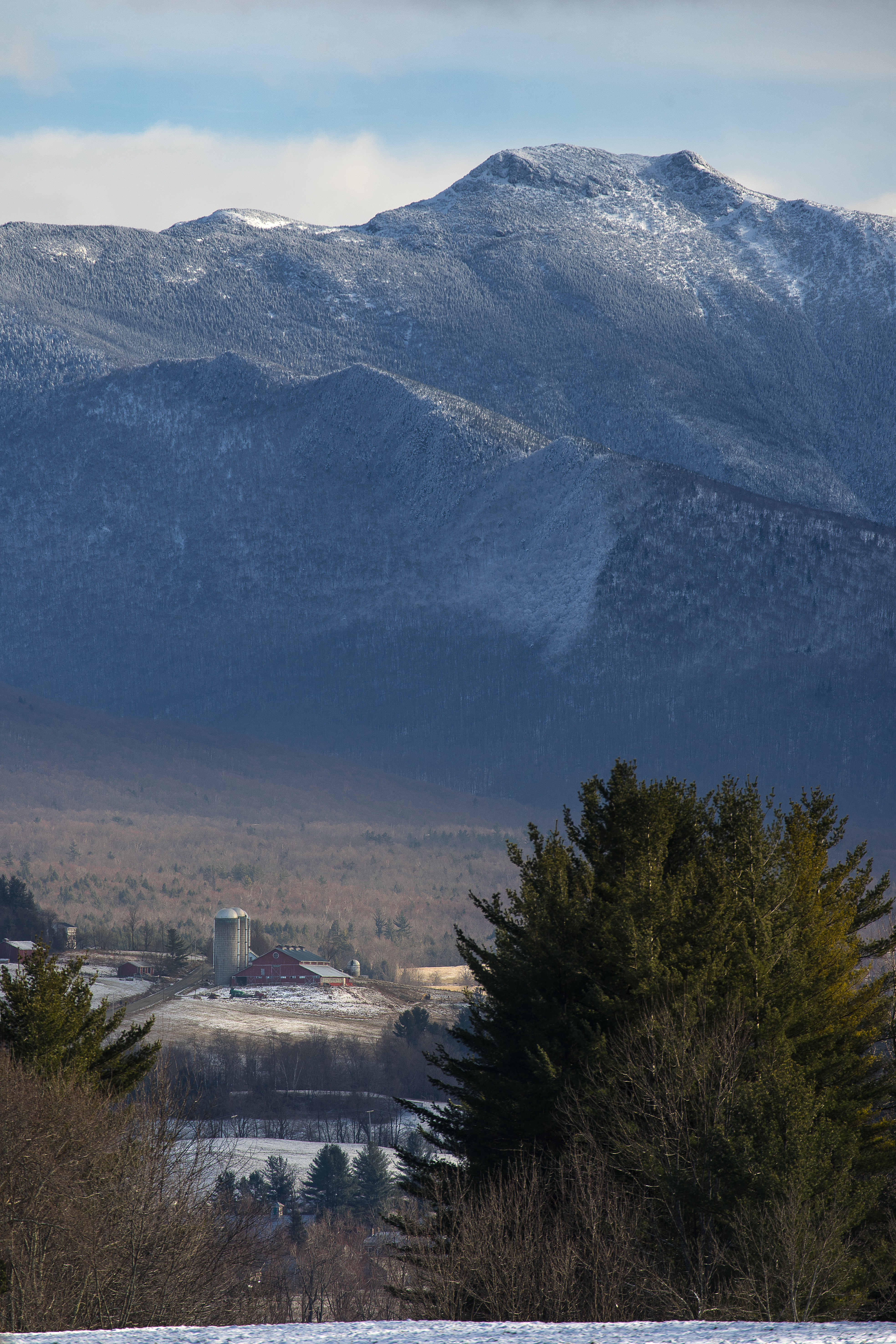
Continue uphill past the next farm. You’ll find another pullover on the left where the road curves. Park here, cross to the opposite side, and walk a few feet up or down the road. Through a narrow break in the trees you’ll again find that view of the same Bryce Road farm peeking through with the mountain towering behind it.
Both horizontal and vertical compositions work well here, with the farm balancing the mountain and the tree gap framing the scene. For verticals, zoom in moderately. Your main obstacle here will be the power lines and you’ll need to step down a few feet off from the road to eliminate them from your frame.
5. Tinker Farm – https://maps.app.goo.gl/hwu5KWKv3xKXwtuf6
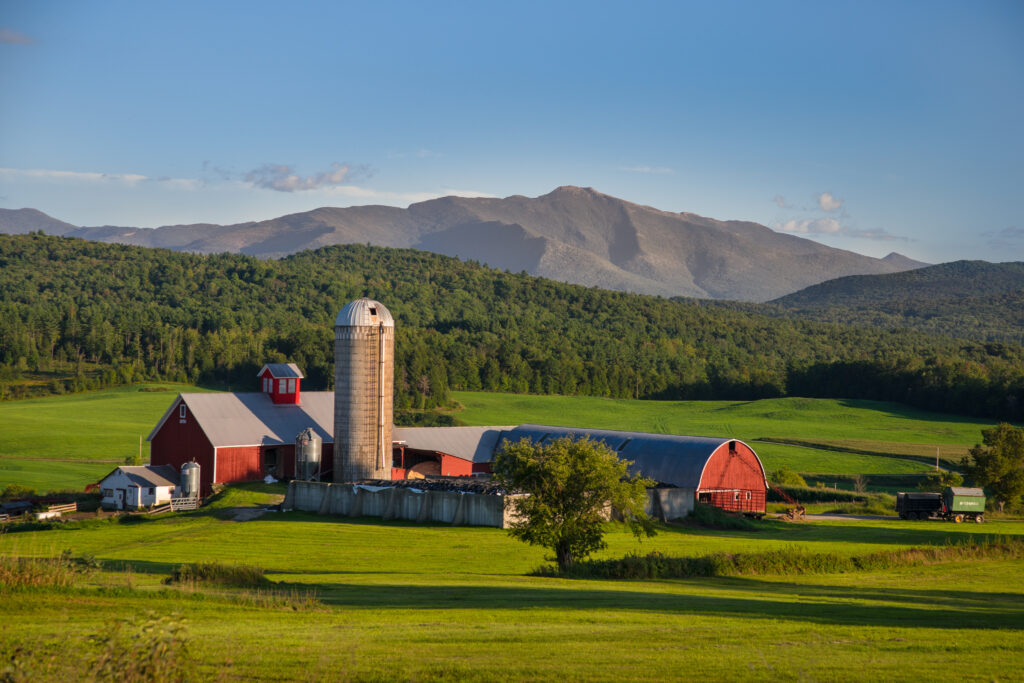
This location sits farther up the road toward Fletcher. Pumpkin Harbor Road changes its name a couple of times but stay on it. Just after Fairfax road it becomes Fairfield Road and the final view is just up the hill on your left.
Find your position uphill from the farm where you have a clear line of sight past the bushes with the barns aligned beneath the mountain. This shot is straightforward—barns and mountain are roughly equal in size. However, farms are working operations, not photo studios. Keep in mind that working farms aren’t there just for us to look at or take pictures. They’re there to produce food, so at times this view may not be as picturesque as the other views that we’ve covered. This view really needs special conditions—dramatic clouds, snow, or sunset glow on the mountain—to truly sing. If the scene isn’t working, return to one of the earlier locations to see if changing light has transformed the view.
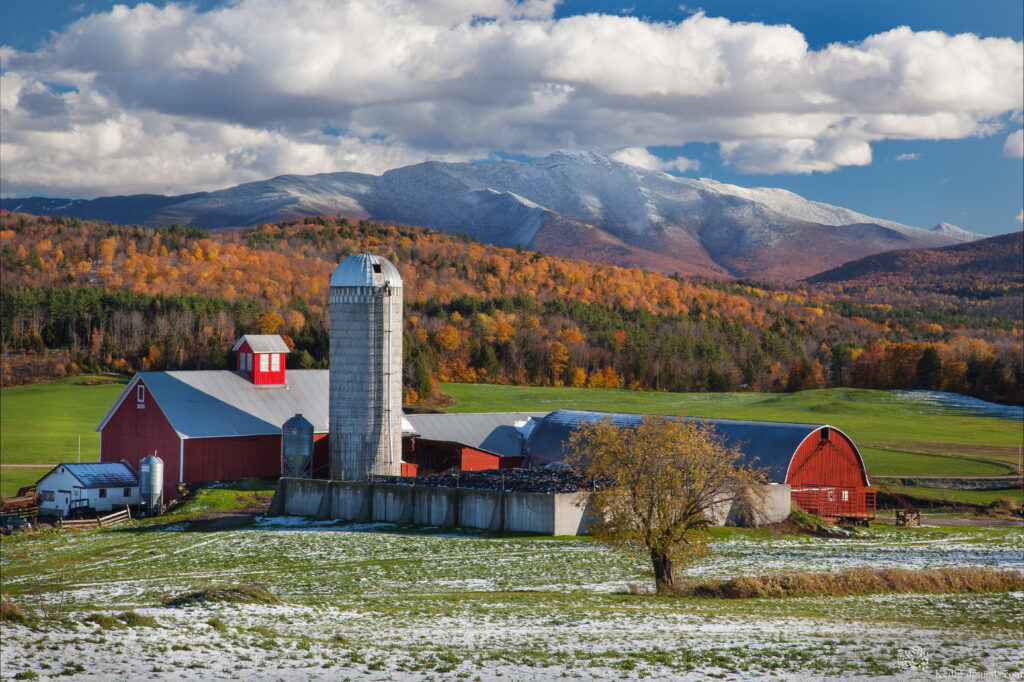
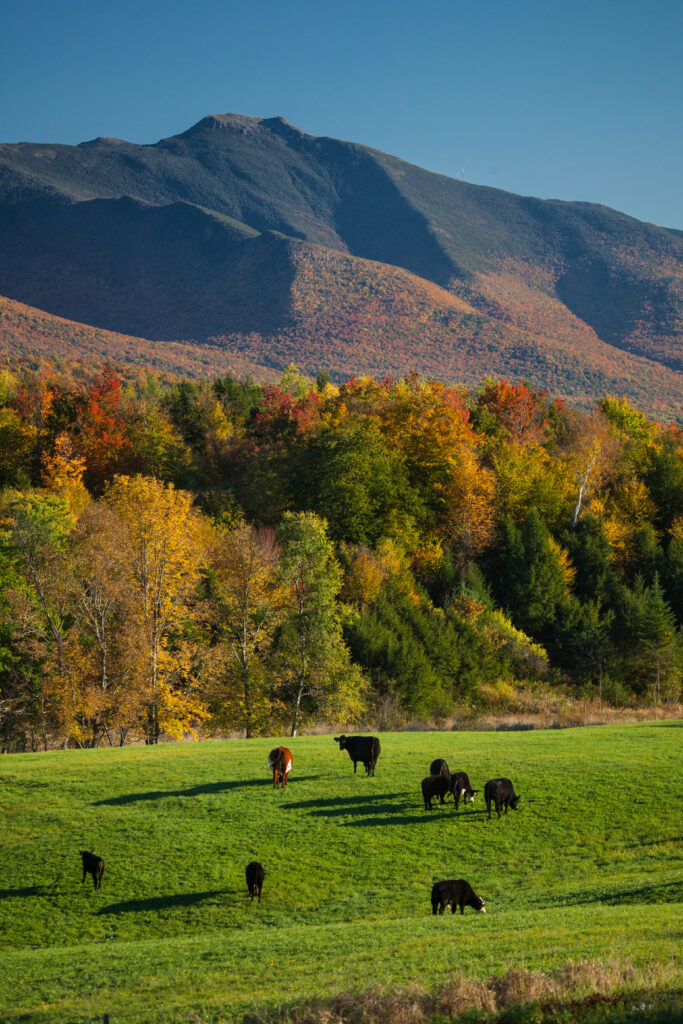
On the road between Cambridge and Fletcher there are a few views of Mansfield off to the side of the road. I didn’t list them here because they lack any interesting elements such as a barn to round out the composition. Sometimes, however you can luck out as I did here. Cows, fall foliage, and a great mountain view were too much to resist. Keep your eyes open. Having some standard locations to go to will help to guarantee that you come home with something usable, but some of the best shots can unexpectedly present themselves in between the destinations that are planned–out.
Planning Your Visit
If you’re targeting a specific time like sunrise or sunset, choose one location and commit to it. You’ll want a tripod at sunset, and moving between locations takes valuable time. I particularly favor Sweet Road and Pleasant Valley for golden hour.
The beauty of having established locations is returning in different light and weather conditions. I’ve memorized hundreds of such spots across Vermont over decades of exploration. This knowledge lets me focus more time on on light and weather, less time on scouting, and lets me work efficiently to capture multiple outstanding images quickly.
I still remember a group of plein air painters at Pleasant Valley watching me arrive, capture all my shots in about two minutes, and begin to pack up my tripod. They teased me about being in a hurry, probably thinking I’d just grabbed some casual snapshots. They did not see the number of times I’d been there setting up compositions. The sky to the south was what brought me in to the spot, but knowing the scene let me easily grab the best views with minimal effort and time. I went on to shoot at two other of these views the same day. As you build your own collection of favorite locations, you’ll find you almost always have a prime spot nearby for those times when the sky, mist, or light suddenly turns magical.
I’m confident you’ll come to appreciate these locations as much as I do. Happy shooting!