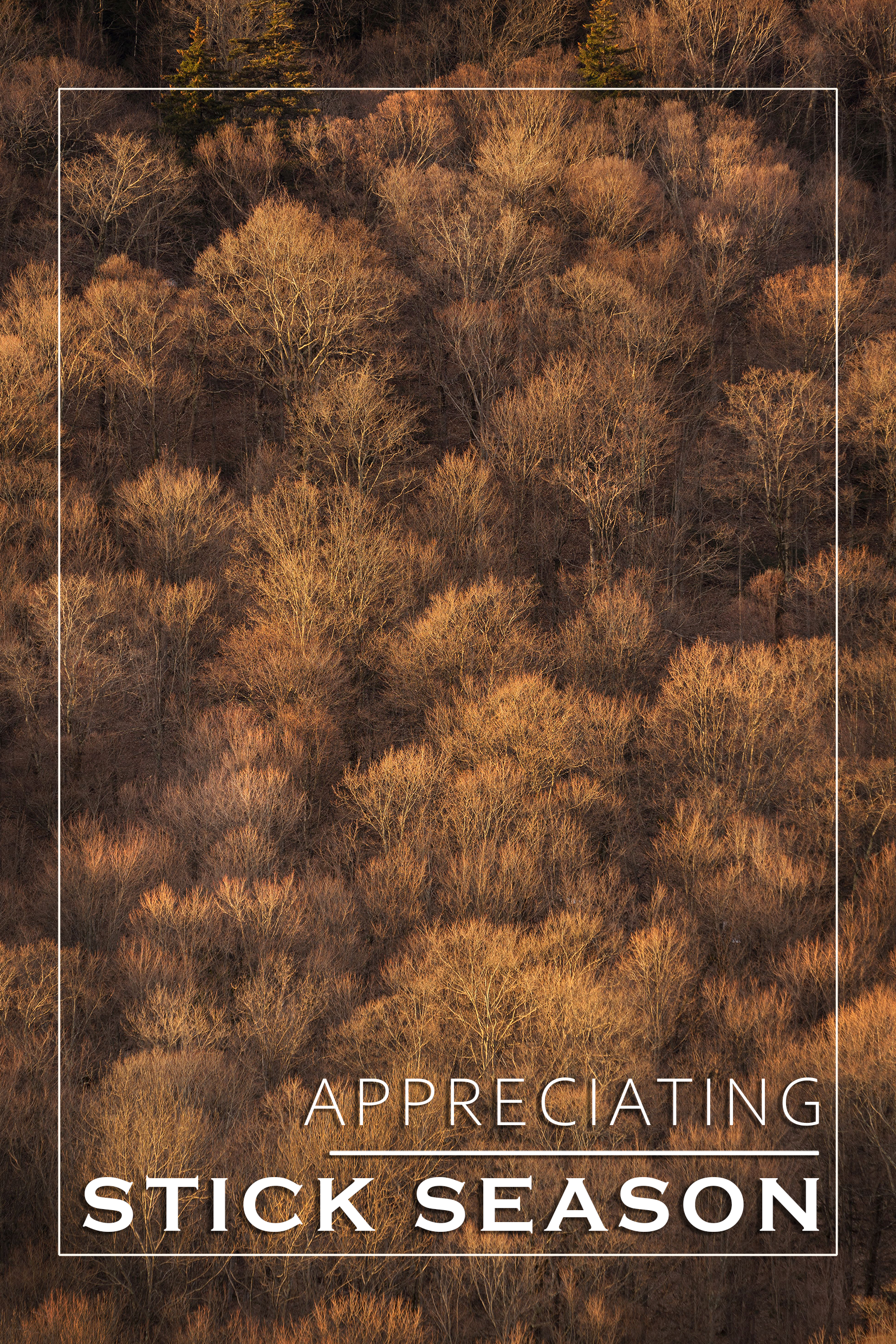
It’s no secret. Stick season kind-of sucks far as photo opportunities go, but it doesn’t have to be ugly or depressing. If you’re looking for subjects to photograph, it doesn’t have to leave you scrambling for ideas either. There’s plenty of interest and beauty to be found, whether you are a photographer or just a roaming observer of nature. Photographers often get discouraged by the emptiness and wind up sitting out the season indoors, but there are great shots to take if you shift your focus and know where to look. An easy way to get started is to focus your attention away from the larger landscape and examine the smaller scenes and more intimate details that are all around. Here are some examples and tips for finding and execution the shots. They should be enough to keep you busy the entire season.
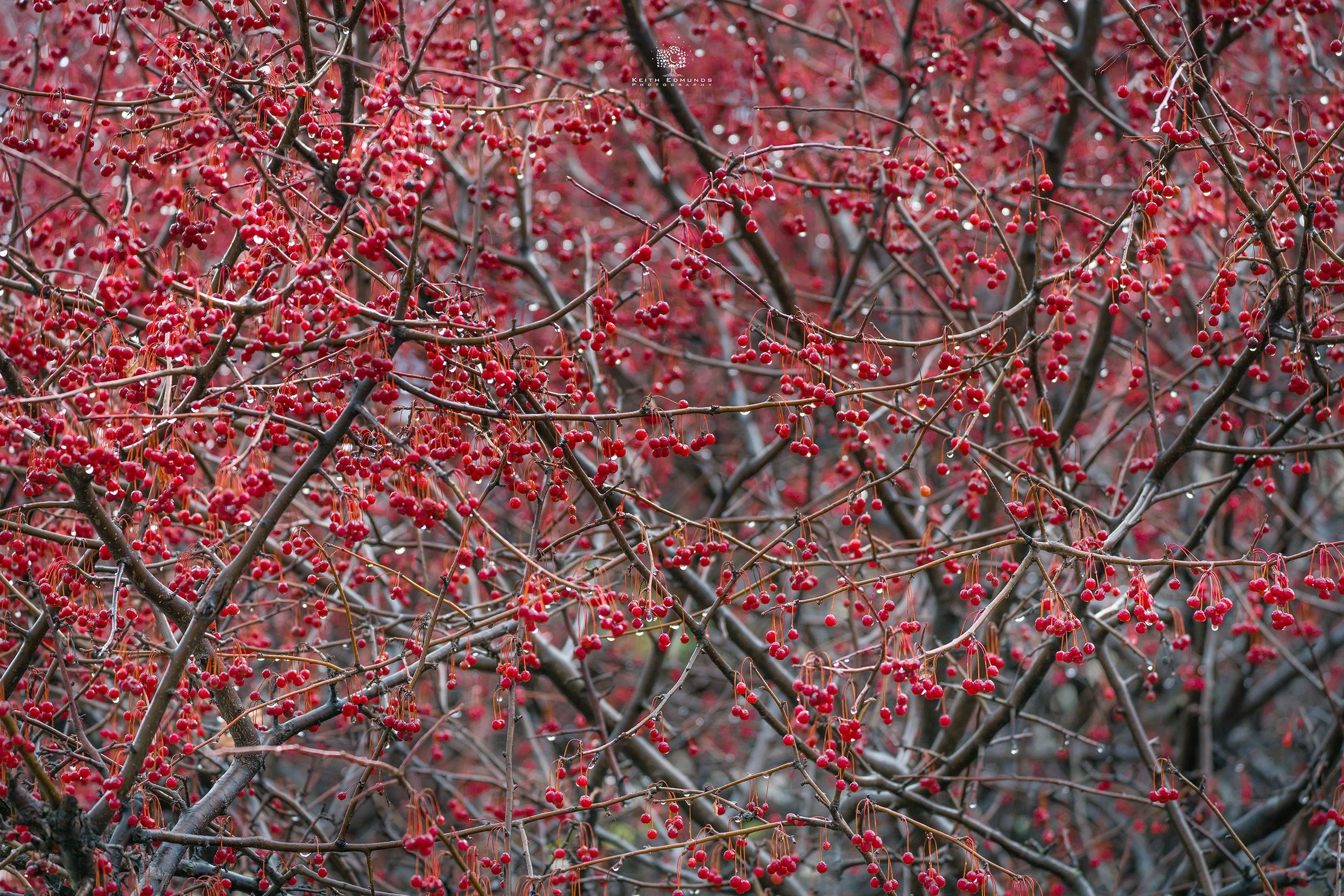
Cherry trees, apple, winter-berry, bittersweet, and other bushes keep plenty of color. Rain can really light up a scene as long as you have somewhere dry to shoot. I never even got out of the car for this one I was forced to use a high ISO to keep from blurring the picture. The rule of thumb is this if you have a 400mm lens then 1/400 second is the slowest shutter speed you can hold by hand. 50mm lens would be 1/50 second. 100 mm lens would be 1/100 second, and so on. Unless you have a tripod then you may have to use a very high ISO to get a normally exposed picture, since you can’t go any lower on the shutter speed.
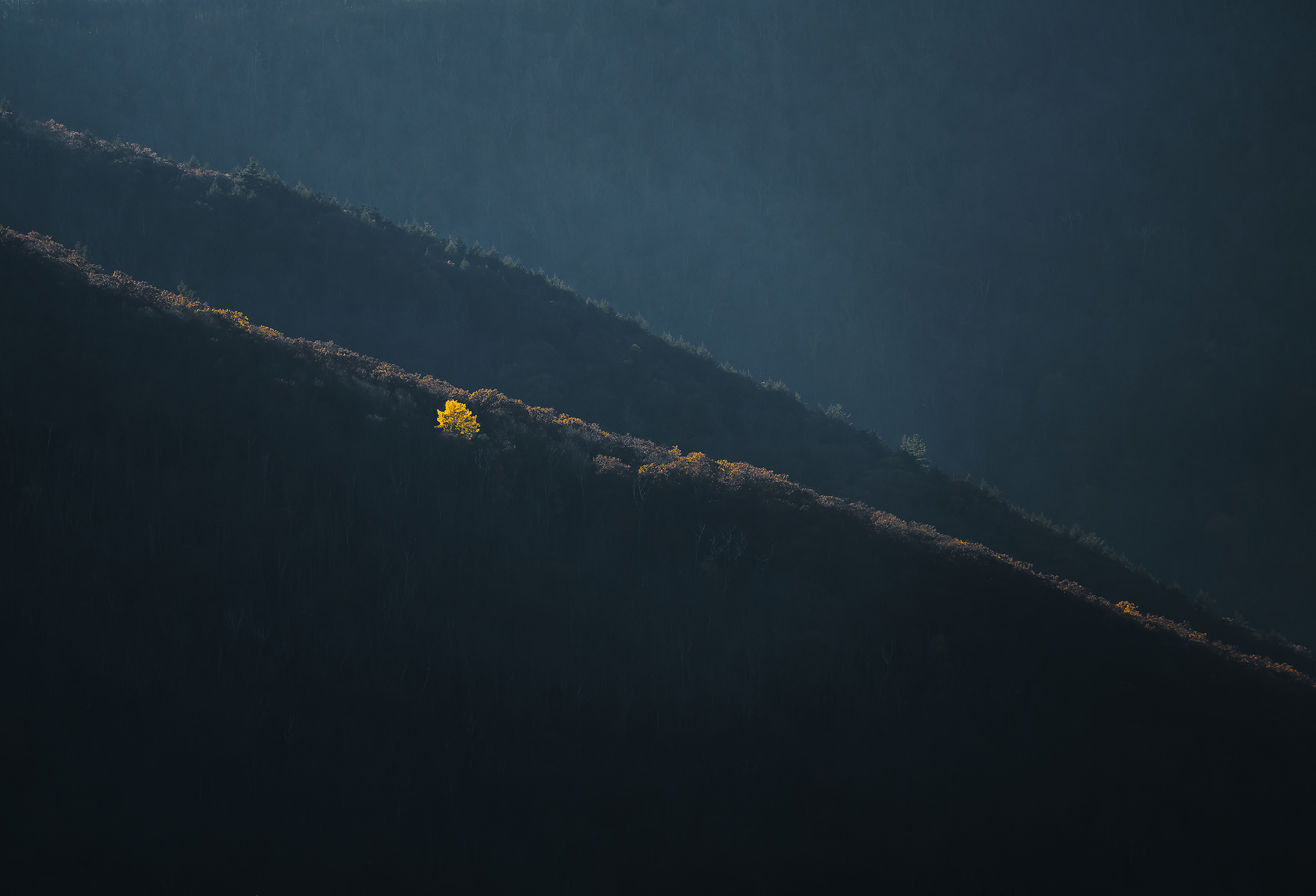
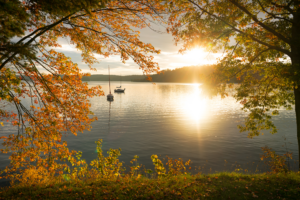
Between autumn and winter there are often lone trees that through factors, such as deep roots or favorable sunlight, manage to hold onto their color long after their surrounding neighbors. Keep an eye on the hills around you. The contrast with their bare neighbors always makes for a good shot.
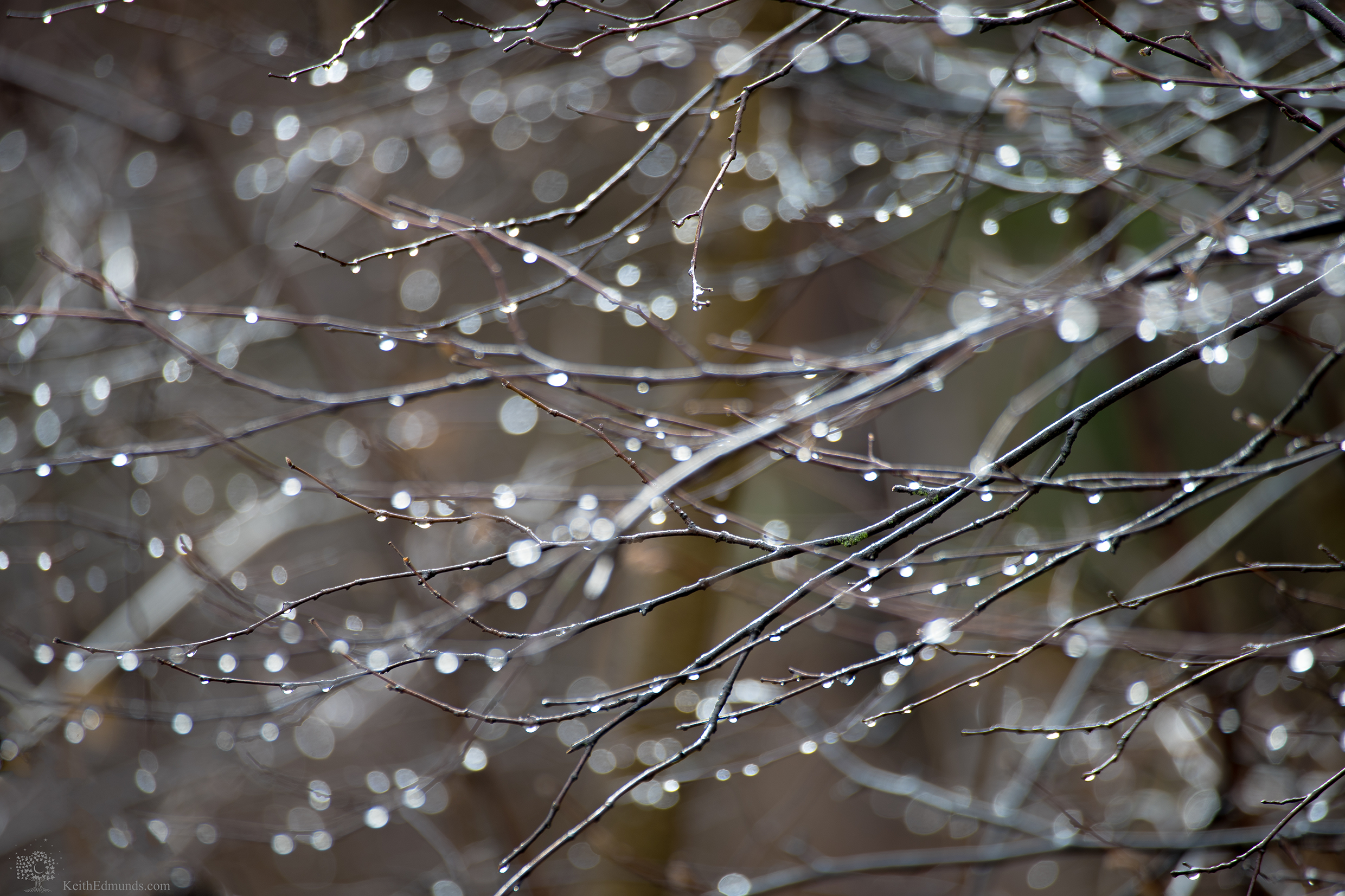
For this one I opened the rear hatch of my SUV and set-up my tripod underneath. I started just looking for individual sticks with raindrops. As usual, I used my long zoom lens and used the aperture wide open to keep a very shallow focus. With all of the raindrops catching light I knew they would make nice bokeh in the background. “Bokeh” is the term for those artistic rounded shapes that small highlights make when you throw them out of focus. Don’t be afraid to play with the focus. I didn’t focus on the obvious closest branch or even the background. Instead the middle branch is the part in focus with bokeh both in front of and behind it. Try this with branches or fields of tall grass. Zoom in and just start rotating the focus ring until you find something interesting. It’s an easy solution when you can’t find a scene that catches your eye. It’s also a prime example of thinking like a photographer because you are actually creating the composition rather than driving around and waiting for a scene to present itself.
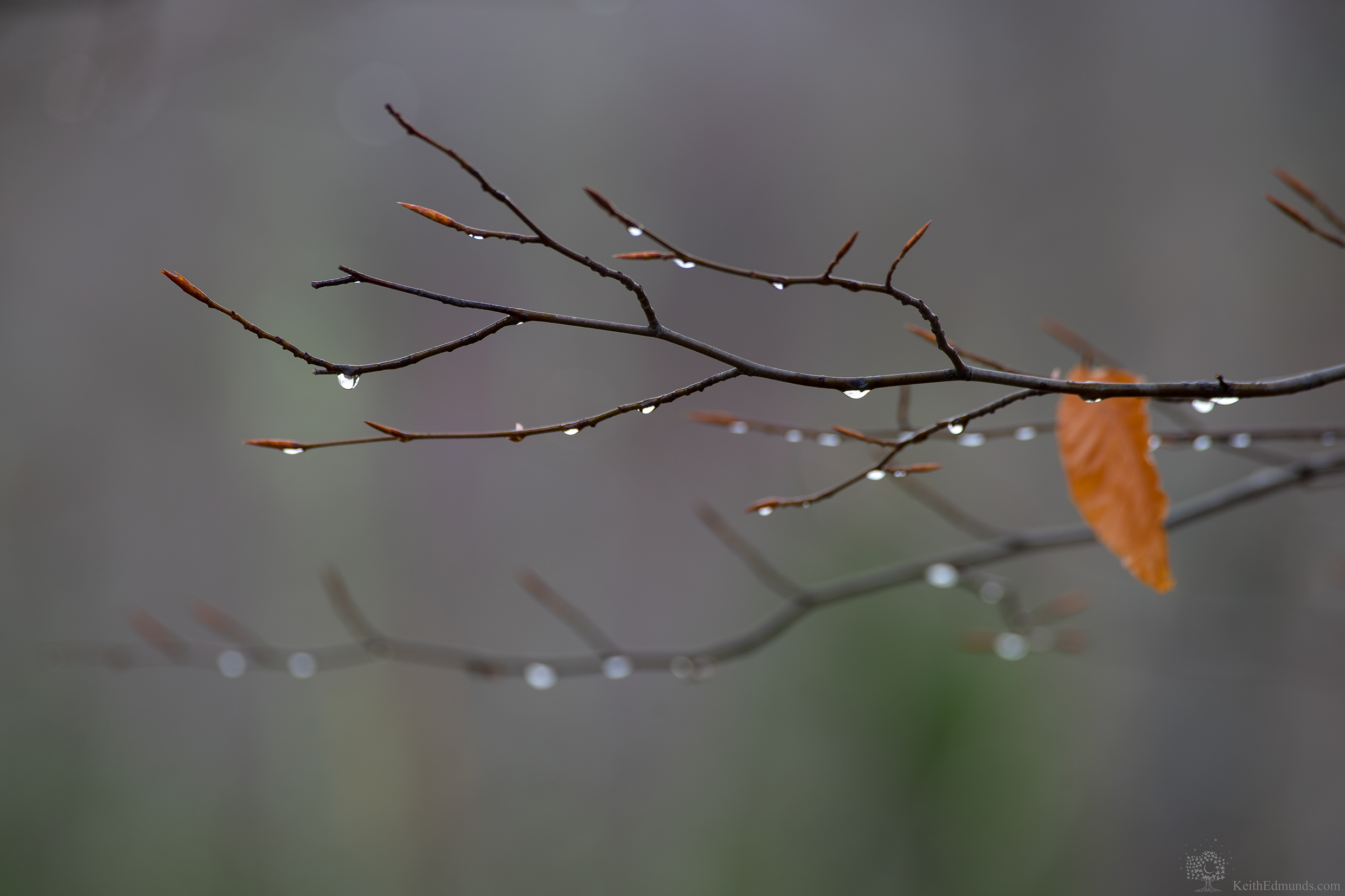
As with the previous image, keep an eye out for individual branches that you can isolate. Photographers and dogs both like it when they find an interesting stick. To separate branch from the background, use a long zoom lens. Open the aperture all of the way and try to get just one branch in focus with everything behind it out of focus. If you can’t seem to get the whole branch in focus (or berries, or whatever caught your eye), then close your aperture back down a few steps so the focus isn’t so narrow. Take a few more shots and keep looking at them on the screen, see how you are doing. Take several, more than you think you need and delete the bad ones later. If the whole shot looks blurry then increase your shutter speed until they stop looking blurry, or put the camera on a tripod. The key here is simplifying the shot. Move up down. Take a few steps left or right to move where your subject falls in relation to the background and don’t put a busy background behind the subject. Also keep an eye out for simple shapes or colors to add interest to a branch such as rain drops or a last un-fallen leaf.
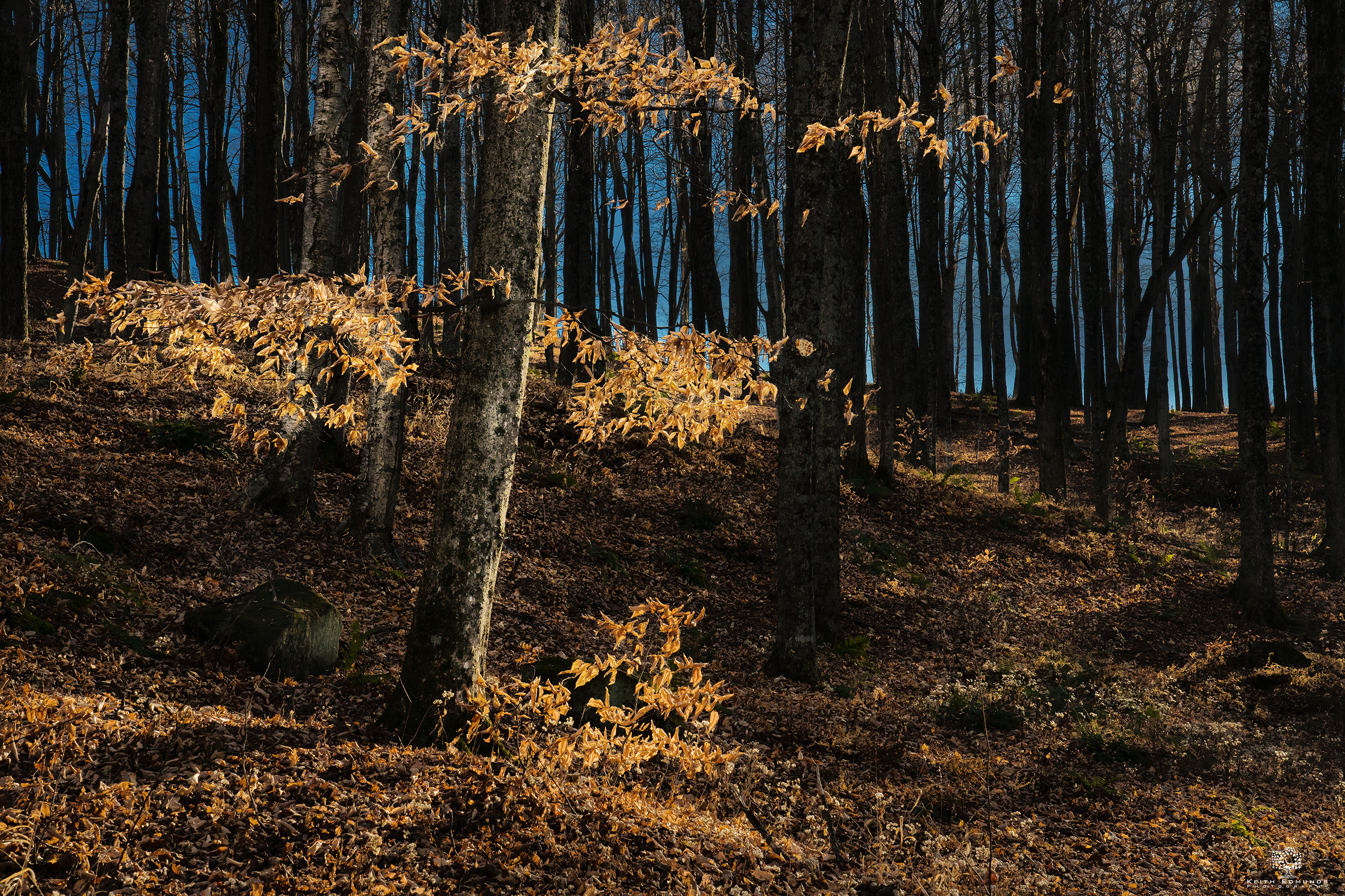
Some trees such as the beech and oak hold their leaves well into stick season. Here in Vermont beeches are especially plentiful on wooded hillsides that are protected from the wind. Driving down any back road I can almost always fine one with color. Sometimes a patch of sunlight can single one out from an otherwise dark background.
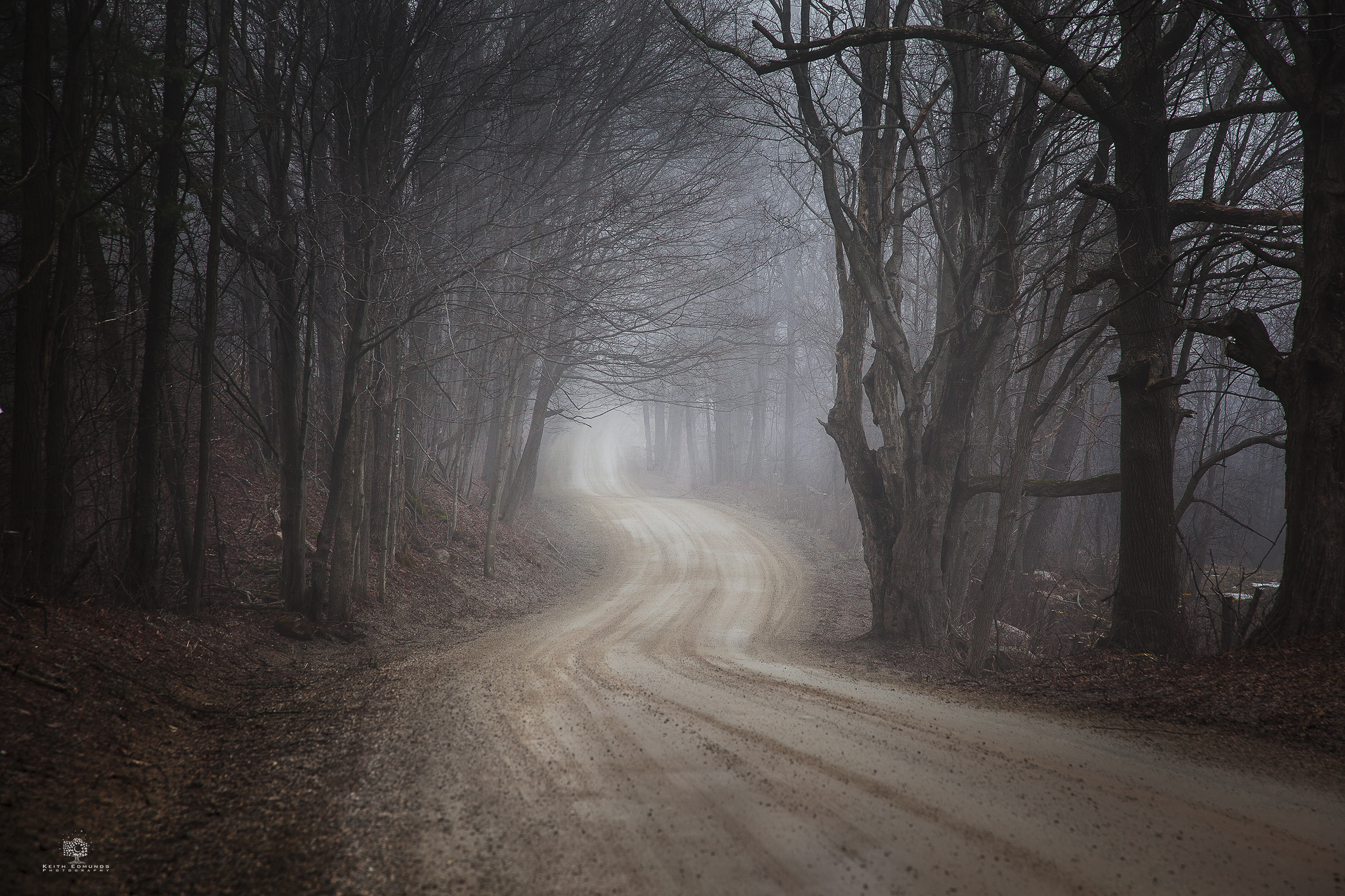
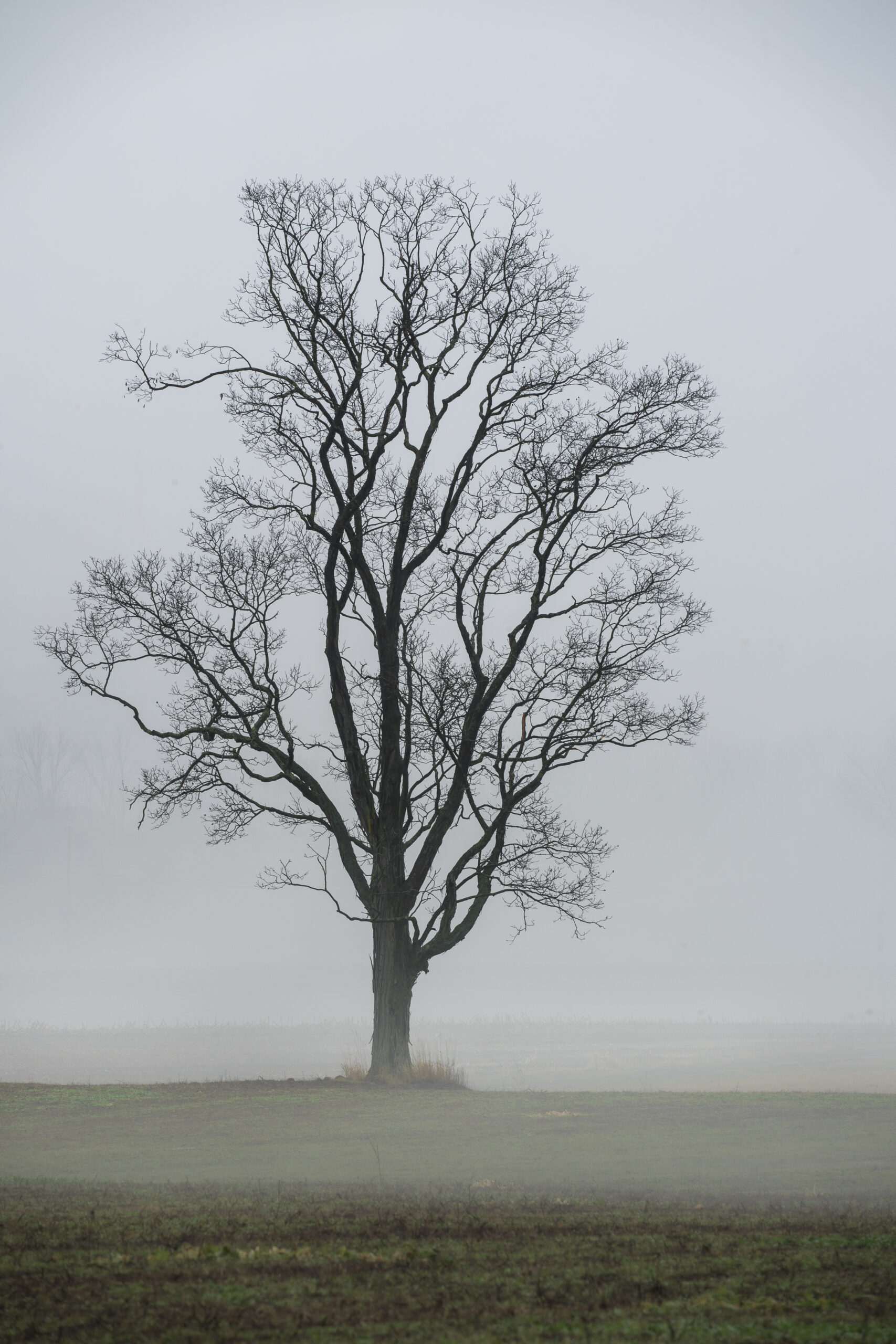
Dark or moody isn’t just for Halloween. Fog and mist can transform an otherwise ordinary scene. For a scene to photograph in the fog I look for strong lines such as the outline of a tree… or a path to follow into the distance.
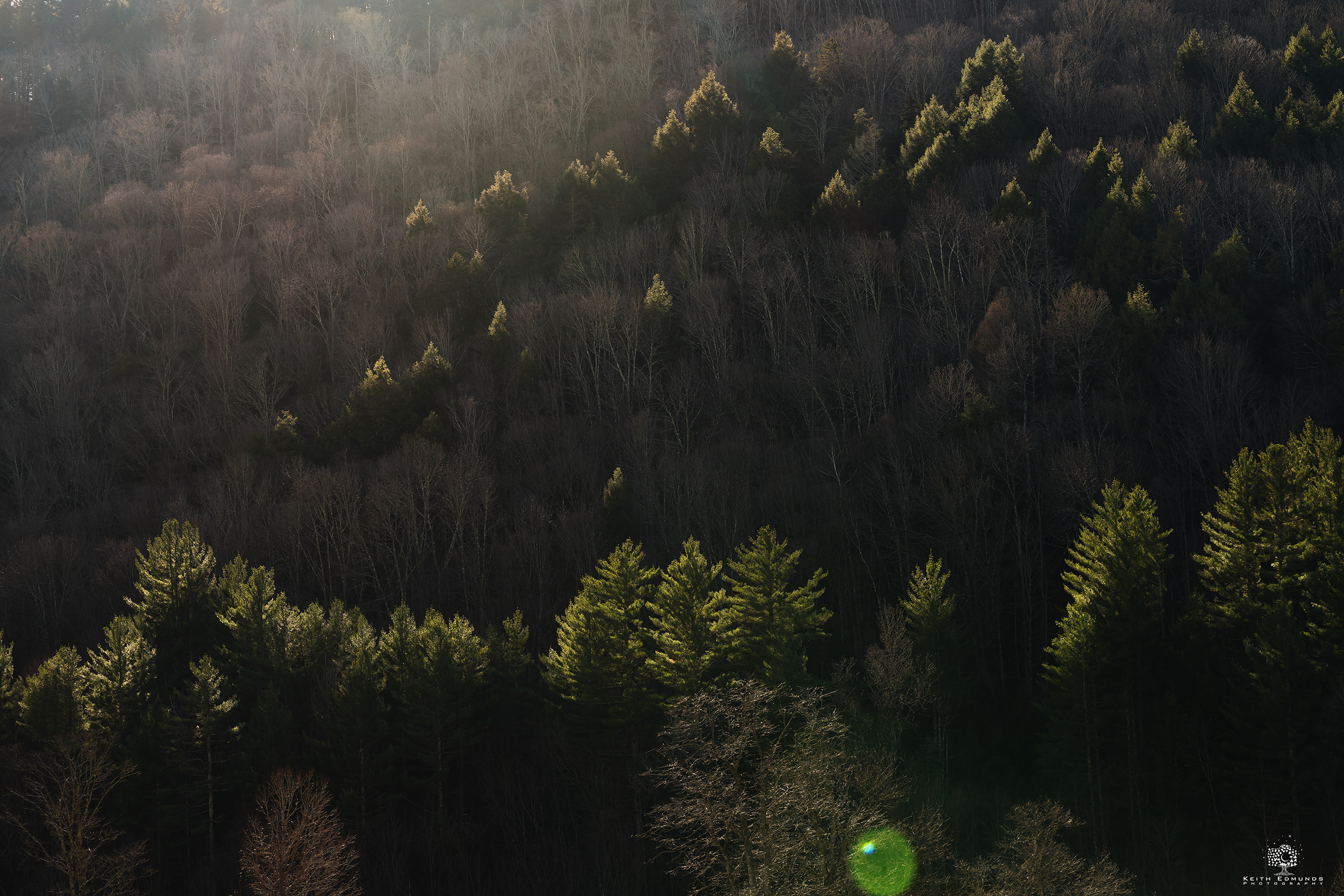
The difference between the fir trees and the stick trees: The sun was setting behind a nearby steep hill just as it was ducking under the ridge. You don’t always have to wait for the perfect time to catch light like this if you have a hill nearby, which is highly likely if you are taking a picture of a nearby hill. By going uphill you can make the sunset last longer and even bring it back above the horizon. That’s the same way that you find where the sun is just peeking over. Just look for the line on the ground where sunlight meets the shadow. That’s the spot where the sun will be peeking over at you like this. But even without the sunlight then the difference between the bare sticks and full fir trees is often a good shot, especially after the first dusting of snow or hoarfrost.
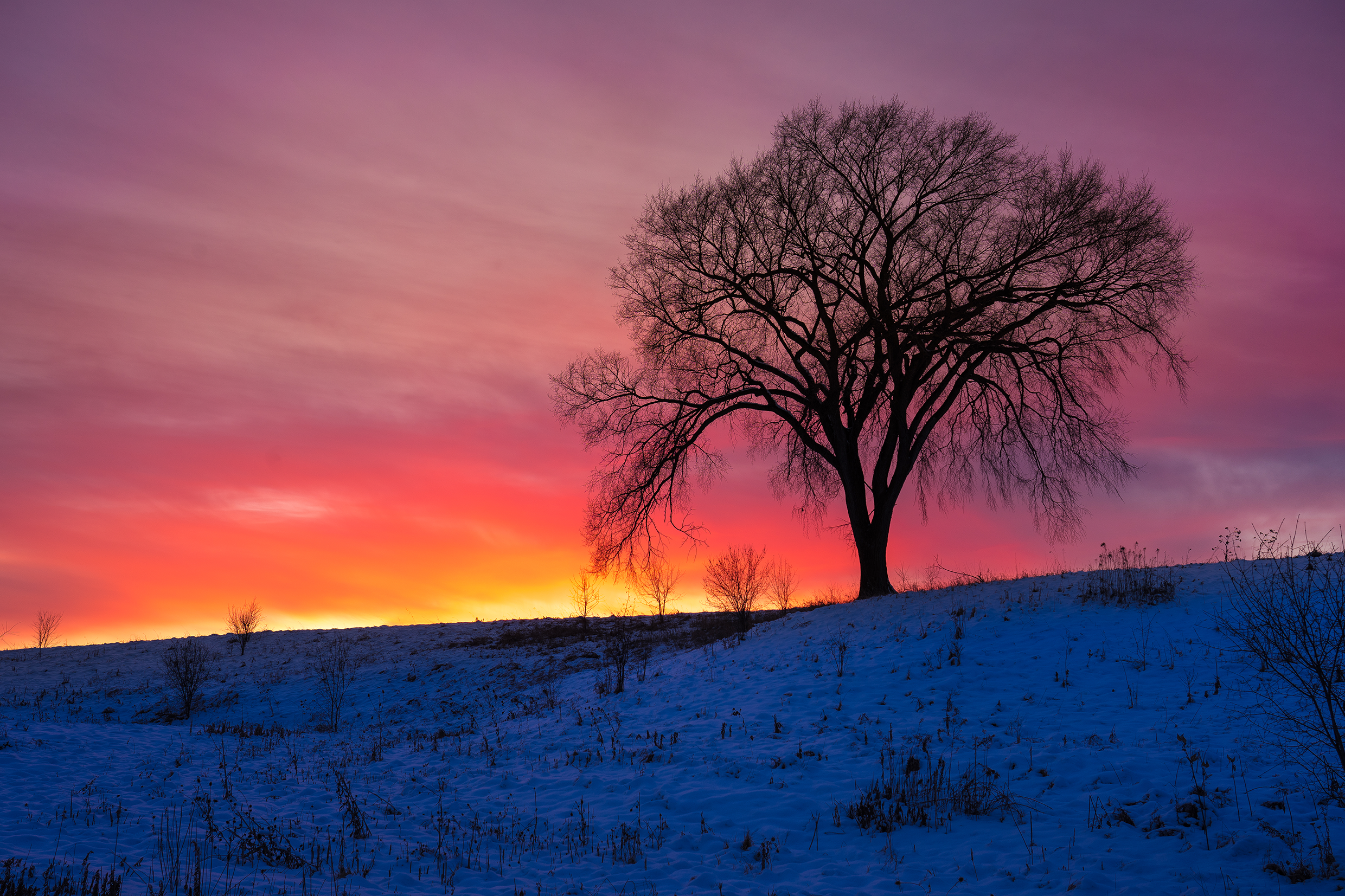
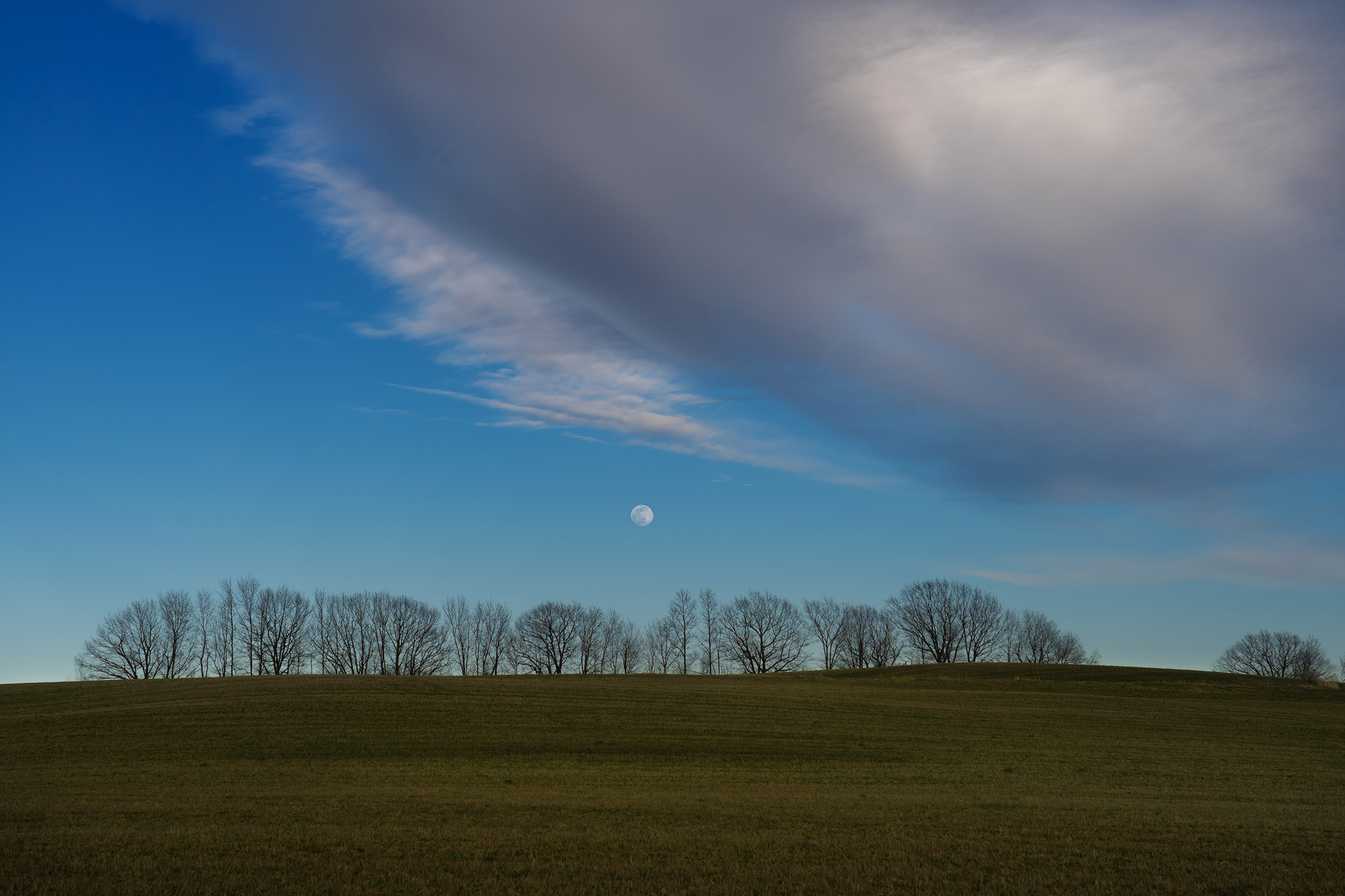
When all else fails drive toward some simple shape like a lone tree or a silo with lots of sky behind it, and get the sunset. I shoot here when I’m up this way.
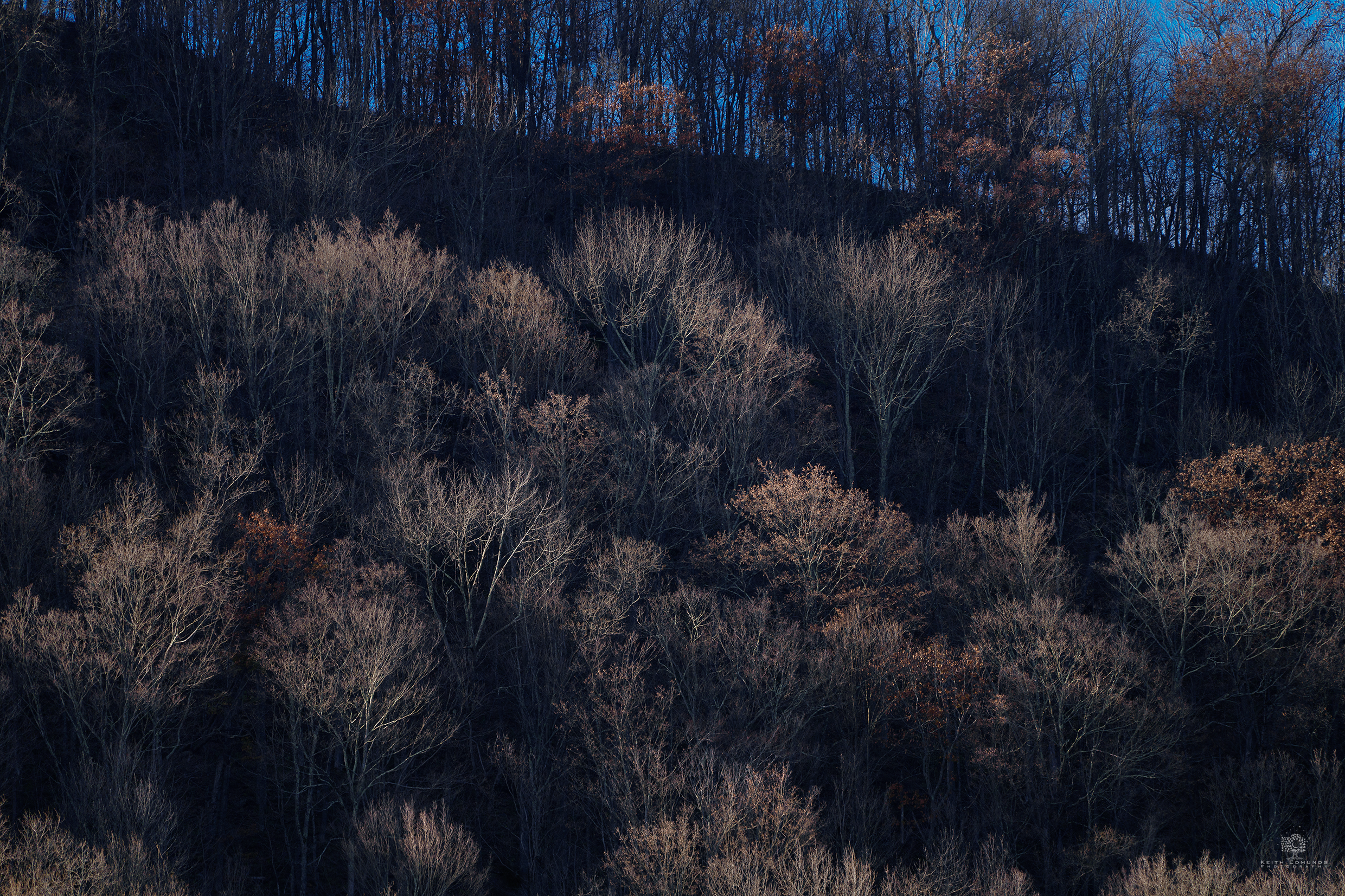
Don’t settle with just one shot. How does moving up or down, left or right affect the image? Keep checking your results on the camera screen, shoot some more, and work right there to improve the shot in real time. You are teaching yourself how to compose and also teaching yourself not to get emotionally attached to bad shots. If you only shoot one you get attached to the memory and can’t see the shot clearly. Take lots of pictures until you get it right in the camera, and delete the bad ones when you get home.
This is just scratching the surface. If these aren’t enough ideas try ways to shift your attention from the larger landscape. Look you can capture shots of old barns, houses, windows, and doors. Look on the ground for low plants, pine cones, ferns, and fallen leaves. Go out at night and shoot by streetlight. Even if you’re stuck indoors then plants, flowers, or food are great subjects. The point is that the limitations of stick season are largely there because of your expectations. You can’t go out expecting to shoot the things you were just shooting in the colorful part of the season.